
The search for nectar
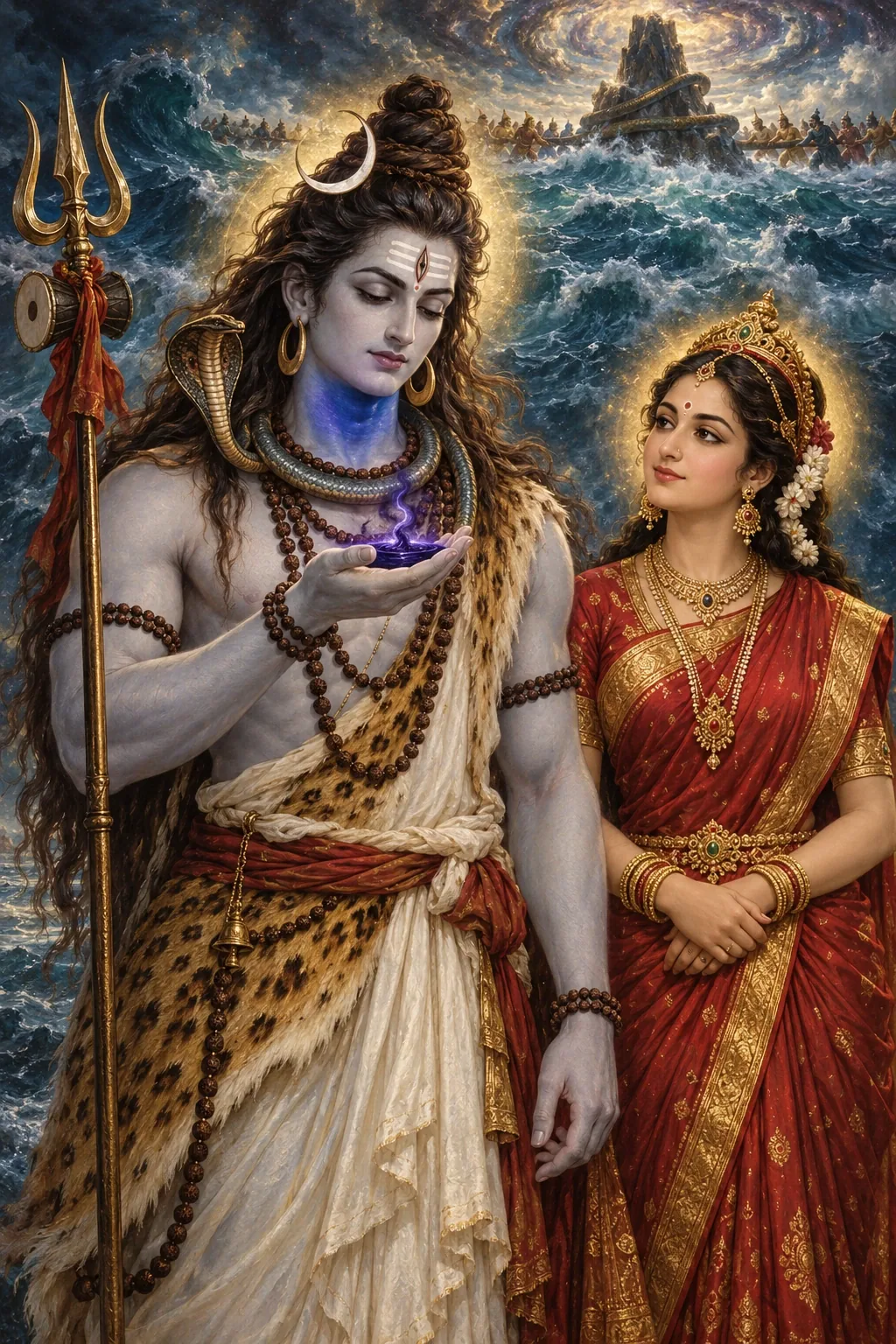
The Ocean of Milk becomes the setting for an undertaking on a cosmic scale. Devas and asuras work together to churn its waters in search of amrita, the nectar of immortality. Vishnu guides the undertaking.
Mount Mandara will be their churning rod; the great serpent Vasuki will serve as the rope. The two groups gather on opposite sides, ready to pull. Their eyes are on the treasure they hope the ocean will reveal.
A mountain needs a foundation
The work is immense. As the churning begins, Mandara sinks into the waters. The strength of those pulling the serpent cannot, by itself, keep the mountain steady.
Vishnu takes the form of a great tortoise and enters the ocean. This is Kurma, the tortoise avatara. With the mountain supported, the devas and asuras can continue their labour.
Above the waters, the rope is pulled and the mountain turns. Below, the divine tortoise carries its weight. The search for nectar depends on a support the churners cannot provide for themselves.

Before nectar, Halahala
The ocean grows turbulent. Its creatures are disturbed by the churning, and something terrible emerges from the depths. The first great danger is Halahala, a fierce poison.
The poison spreads in every direction. The undertaking that promised renewal now threatens living beings throughout the worlds. The hope of gaining nectar gives way to the urgent need for protection.
The crisis cannot be solved by pulling harder. Those who had concentrated on the ocean’s treasure must now turn toward the lives placed in danger.
The journey to Shiva
With the poison spreading beyond their control, the devas and other frightened beings seek refuge in Shiva. They approach the great lord on Kailasa, where he is seated with the Goddess, Bhavani.
Sages honour him there, and the devas offer their prayers. Their appeal brings the distress of the worlds into the stillness of the mountain.
Shiva sees their suffering. The Bhagavata describes him as a friend to all beings: his response arises from compassion for those endangered by the poison.
Bhavani’s quiet consent
Shiva speaks to Bhavani about the danger. He points to the beings struggling to preserve their lives and expresses his responsibility to protect them.
Bhavani understands his power and gives her consent. She is present as his divine companion, sharing in the moment before his act of protection.
The account gives this exchange a place within the cosmic emergency. Shiva’s response is preceded by attention to suffering and a conversation with the Goddess.
The poison in his palm
Shiva takes the Halahala into his palm and drinks it. What had spread fear through the worlds is met by the power of Mahadeva.
The Bhagavata places compassion at the heart of his action. He receives the poison for the welfare of living beings, answering their need for shelter.
The story’s turning point is simple and extraordinary: Shiva accepts the danger that others cannot overcome. Protection becomes something he does, rather than merely something the frightened beings ask for.
The blue-throated one
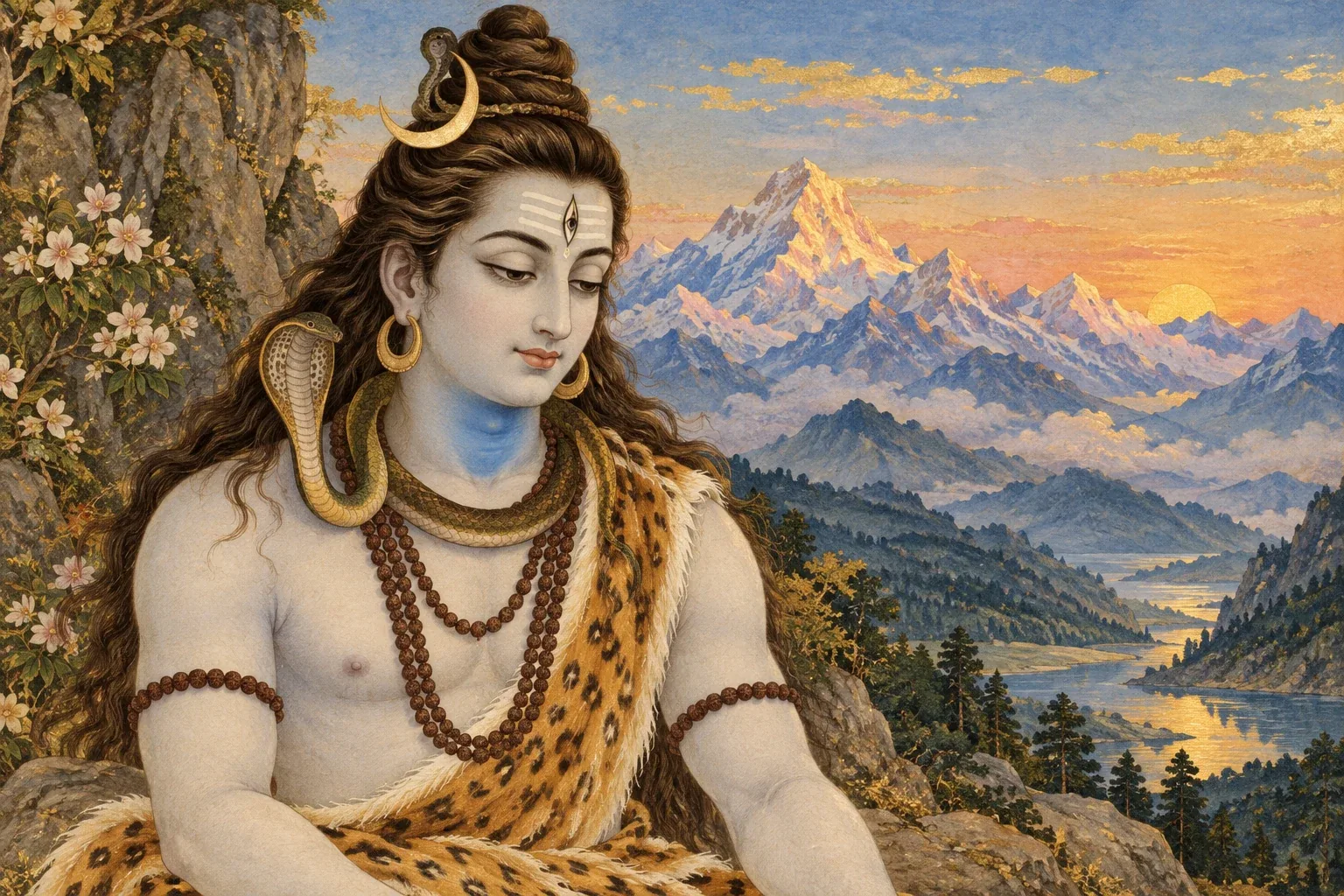
The poison leaves a blue mark upon Shiva’s throat. The text presents that mark as an ornament of the lord. It is remembered in the name Nilakantha, the blue-throated one.
The sign of the poison becomes a sign of protection. In devotional imagery, the blue throat recalls this act whenever Shiva is worshipped or contemplated.
The narrative also reflects on those who feel the suffering of others as their own. Care for living beings is connected with worship, giving the episode a meaning beyond its miraculous action.
The work can begin again
With the immediate danger relieved, the devas and asuras return to the Ocean of Milk. The next chapter describes them taking up the churning with renewed energy.
The larger story of the ocean’s treasures continues. This episode pauses at the act that makes that continuation possible: Shiva’s compassion has answered a danger that threatened everyone.
The memory of Halahala remains with the blue throat. The search for nectar can proceed because the lives exposed to poison have first been protected.
PAUSE & REFLECT
Strength turned
toward another’s need.
What makes power worthy of reverence? In this story, its beauty lies in the protection it offers. Shiva’s greatness is remembered through the beings who find shelter in him.
One way to contemplate the episode is to ask where our own abilities can become useful to someone in distress. This is an invitation to thoughtful care, drawn from the story’s emphasis on compassion.
TRADITIONS & INTERPRETATION
One blue throat,
different sacred tellings.
The Bhagavata Purana honours Shiva’s compassion within its Vishnu-centred narrative. Bhavani understands his strength and consents to his act; the poison leaves the blue mark on his throat.
The Skanda Purana’s Kedara Khanda gives the churning a stronger Shaiva emphasis. Its account includes Narada’s warning, the neglect of Shiva and Ganesha, and teachings about divine reality. These details belong to that telling, rather than to the narrative followed above.
Reading the accounts alongside one another reveals different theological concerns within a shared episode. The reflection on using strength in another’s service is an editorial contemplation of the Bhagavata’s theme of compassion.
Explore the texts and chapter references