Shruti
“That which is heard”
The Vedic corpus is revered as revealed knowledge. It includes the Upanishads.

THE LIBRARY / SACRED LITERATURE
Hymns to hear. Questions to contemplate. Stories to return to. Explore the texts that open different doors into Sanatan Dharma.
Explore the library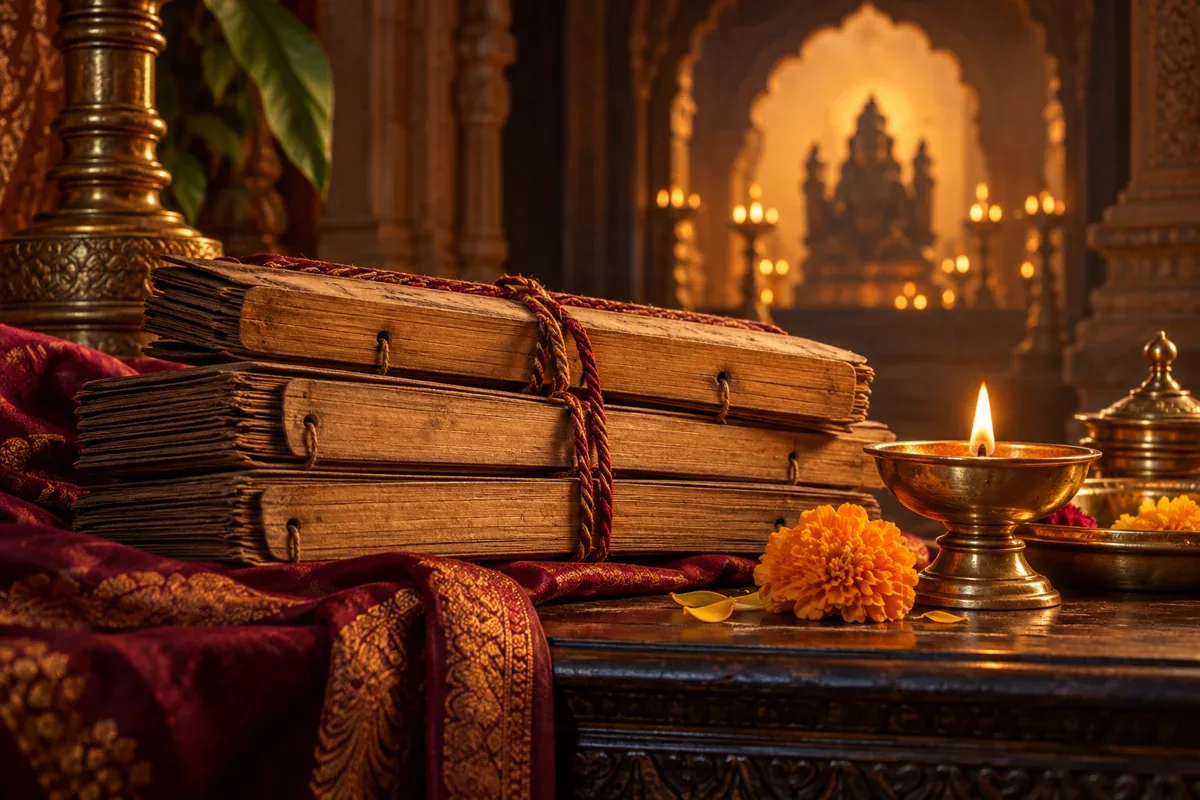
01 / FINDING YOUR BEARINGS
These categories offer a starting map. The authority and interpretation of a text also depend on the tradition reading it.
“That which is heard”
The Vedic corpus is revered as revealed knowledge. It includes the Upanishads.
“That which is remembered”
A broad category including epics and Puranas, conveying teachings through narrative and reflection.
02 / THE VEDIC FOUNDATION
Preserved through oral recitation, Vedic texts are part of a living chanting tradition.
A collection of sacred hymns.
Hymns arranged for chanting, drawing extensively on the Rig Veda.
Prayers and formulae connected with sacrificial rites.
Hymns, incantations and spells across a varied collection.
A common introduction distinguishes four kinds of literature: Samhitas (hymns and mantras), Brahmanas (ritual explanations), Aranyakas (forest treatises) and Upanishads (spiritual and philosophical teachings). The Vedas contain more than hymns alone.
03 / EXPLORE THE LIBRARY
Start with a short introduction. Open a card for context and a place to read further.
SELF / REALITY / LIBERATION
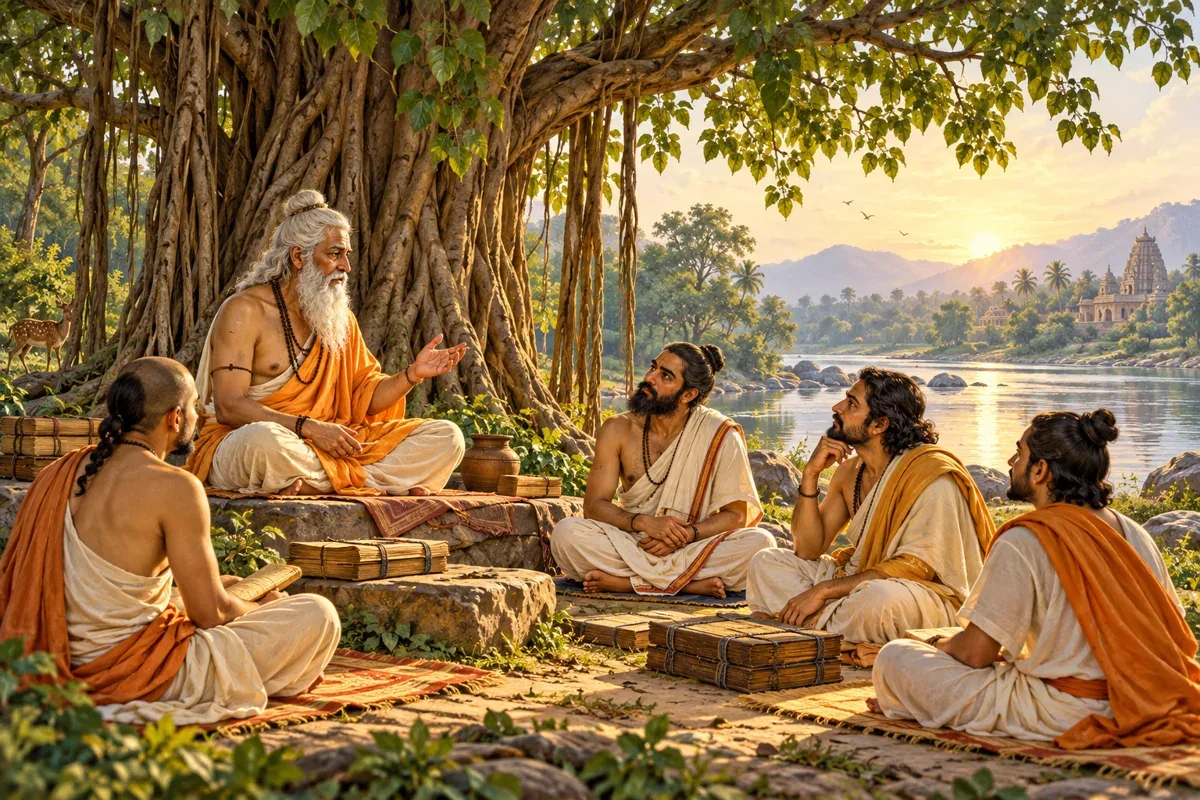
Questions about the self, ultimate reality and liberation within the Vedic tradition.
The Upanishads are part of the Vedic corpus. Their teachings underpin different Vedanta interpretations; a commentary helps reveal which viewpoint you are reading.
Read a Brihadaranyaka dialogue ↗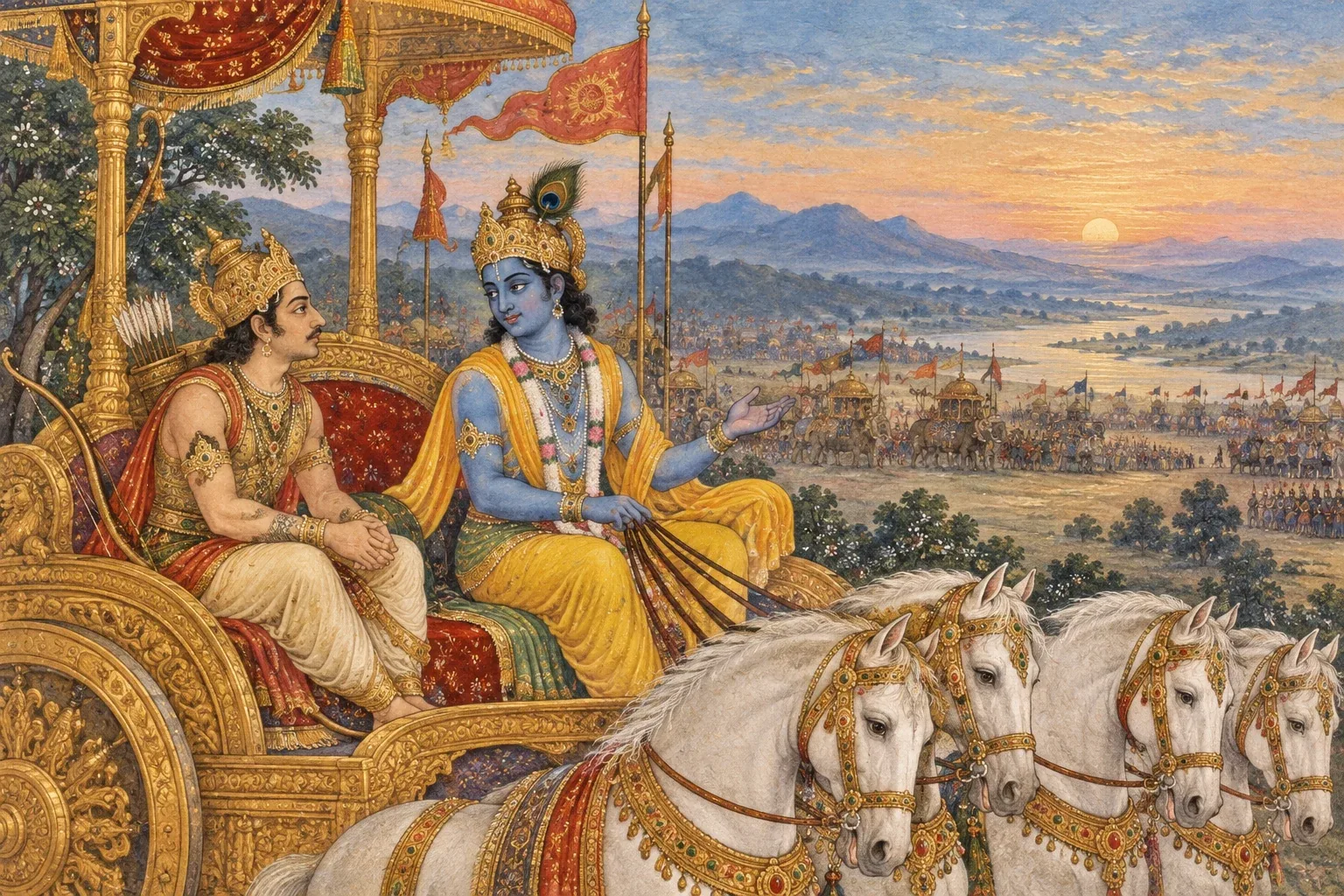
ACTION / KNOWLEDGE / DEVOTION
Krishna’s dialogue with Arjuna on spiritual life amid a difficult decision.
The Gita belongs to the Mahabharata. It is often read on its own, with commentaries that offer different understandings of its teachings.
Explore IIT Kanpur’s Gita Supersite ↗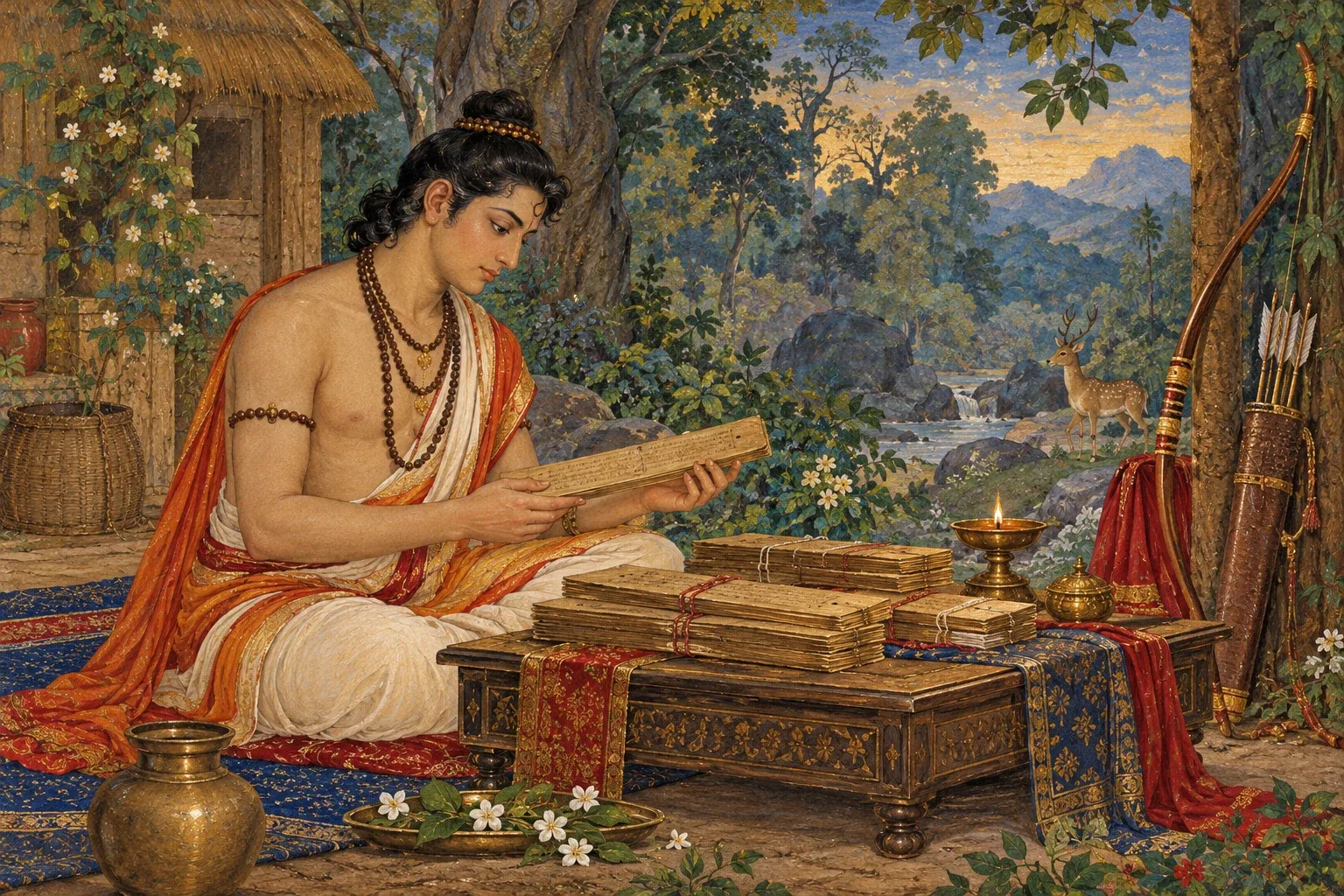
ITIHASA / THE GREAT EPICS
Epic journeys through devotion, duty, family and conflict.
The Ramayana follows Rama’s life and trials. The Mahabharata centres on a conflict between related families and explores difficult questions of dharma. Retellings bring distinct voices: Valmiki’s Ramayana and Tulsidas’s Ramcharitmanas are different works.
Explore the Valmiki Ramayana ↗Explore the Ramcharitmanas ↗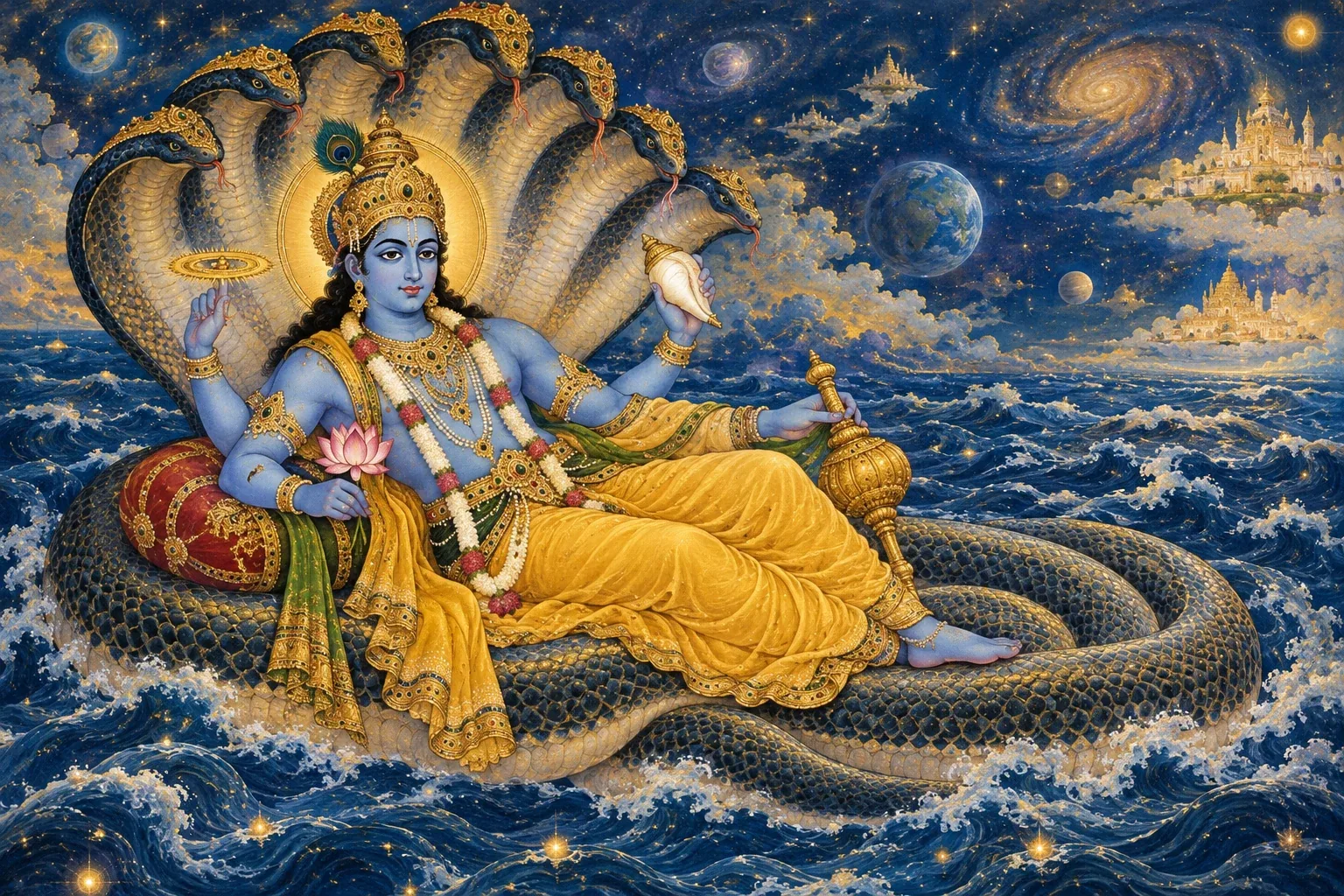
DEITIES / COSMOS / SACRED STORIES
Collections of sacred narratives that express teachings through stories.
Tradition commonly names eighteen major Puranas, alongside many other Puranic works. This is a classification, not a count of all Hindu scriptures. Each story identifies the text and version it draws from.
Read Lalita and BhandasuraExplore the eighteen MahapuranasThe Mahapuranas: a substantial reference →
Explore Sarga & Visarga: Puranic creation →
04 / TEXTS & LIVING PRACTICE
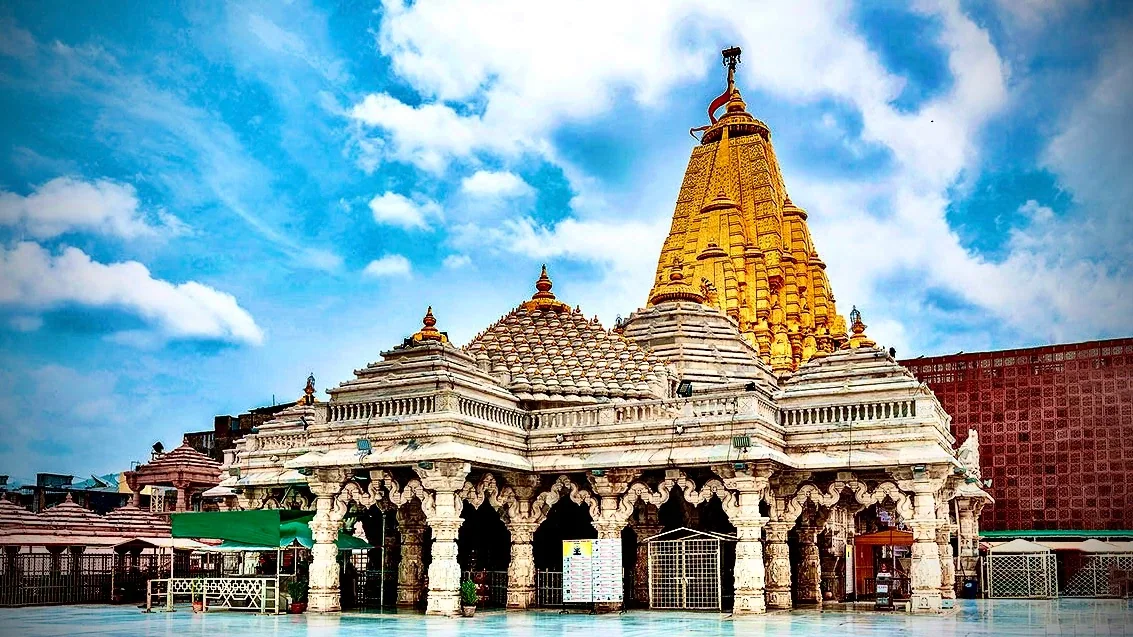
These bodies of literature connect philosophy with worship, meditation, mantra, temple building and sacred imagery. Their teachings and authority are understood within particular lineages.
Shaiva, Vaishnava and Shakta traditions have their own textual heritages. These names cover diverse works rather than a single book or one uniform teaching.
Explore a traditional introduction ↗05 / YOUR FIRST STEP
You do not need to read everything in order. Choose one doorway and give it time.
Read a short passage with a named translation and commentary.
↗I WANT A STORYMeet the characters and follow one narrative at a time.
↗I WANT TO THINK MORE DEEPLYTake one dialogue slowly, with its philosophical context.
↗CONTINUE THE JOURNEY
Meet the divine forms, compare philosophical foundations or follow a narrative.